How Can I Protect My Business From Review Attacks?
July 23, 2026
 Rebecca Stone· Online Reputation Consultant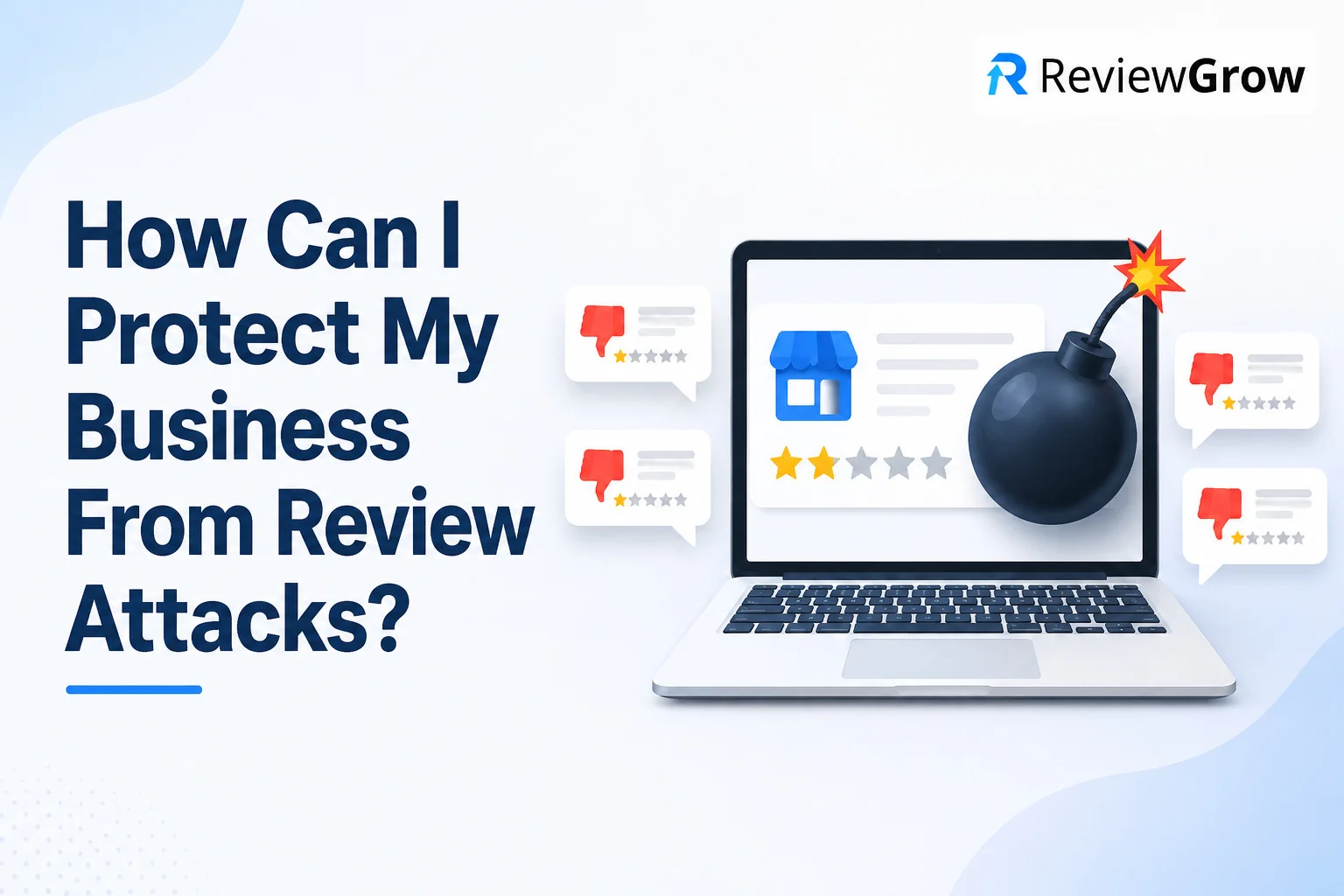
Review attacks can wreck a business's reputation in a matter of hours, and I have watched it happen to clients who did everything right except prepare for one. A review attack is a sudden wave of fake, malicious, or coordinated negative reviews aimed at tanking your star rating and scaring off customers. Competitors, disgruntled ex employees, bots, and even extortion rings all use this tactic because it works fast and it is cheap to pull off. The good news is that you can spot an attack early, respond the right way, and recover your rating faster than most business owners think. I have helped businesses do exactly that, and this guide covers every step.
What Is a Review Attack?
A review attack is a deliberate, often coordinated effort to flood a business with negative or fake reviews in a short window of time. It is different from getting an occasional bad review from an unhappy customer. A real review attack has intent behind it: someone wants to damage your rating, scare off new customers, or pressure you into paying them to stop.
I have seen a handful of variations show up again and again:
• Fake reviews: accounts with no real history posting reviews about experiences that never happened
• Review bombing: a sudden surge of one star reviews, often triggered by a viral post, a controversy, or a competitor campaign
• Coordinated attacks: multiple accounts working together, sometimes across several platforms at once
• Review extortion: someone threatens to post or continue posting fake reviews unless you pay them
• Competitor attacks: a rival business (or someone hired by them) posts fake negative reviews to pull customers away from you
A local bakery client of mine got hit with 14 one star reviews in under six hours, all mentioning "food poisoning" and "rude staff," none of which matched a single real transaction in their POS system that week. That is a textbook review attack, not a bad day.
How Do Review Attacks Happen?
Review attacks rarely come out of nowhere. Once you understand where they come from, spotting one gets a lot easier.
Competitor fake reviews
Some competitors pay for fake negative reviews or write them personally using burner accounts. This is more common in crowded local markets like restaurants, contractors, and med spas, where a lower star rating directly pushes customers toward the next listing.
Review bombing
This happens when a business gets swept into a public controversy, a viral social post, or a mix up with another business of the same name. Dozens or hundreds of reviews land within hours, most from people who never actually visited.
Disgruntled former employees
A firing, a pay dispute, or a bad exit interview can turn into a personal campaign. Former employees sometimes recruit friends and family to pile on with matching complaints.
Bots
Automated accounts can post templated one star reviews at scale. These often share strange patterns, like posting at 3 a.m., using generic profile photos, or repeating similar phrasing across different business listings.
Organized social media campaigns
A single angry post that goes viral on Reddit, TikTok, or Facebook can trigger a wave of reviews from people who have never used your business but want to pile on.
Review extortion
This is the most serious version. Someone contacts you directly, sometimes posing as a customer or an SEO agency, and threatens to bury you in fake reviews unless you pay them or agree to their terms.
How Can You Tell If Your Business Is Under Review Attack?
Here is the checklist I run through with every client the moment reviews start climbing faster than normal.
• A sudden spike in reviews within hours or days, far above your normal pace
• Multiple reviews using near identical wording or complaints
• Reviewer accounts with no profile photo, no other reviews, or accounts created the same day
• Reviewers claiming to be from a city or country your business does not serve
• Complaints that do not match anything your business actually offers
• Several one star reviews landing within the same short window, often overnight
Legitimate Reviews vs Fake Reviews
|
Legitimate Reviews |
Fake Reviews |
|
Posted over weeks or months, matching real visit patterns |
Multiple reviews posted within minutes or hours of each other |
|
Specific details about the actual product, service, or staff |
Vague or generic complaints that could apply to any business |
|
Reviewer has a history of other reviews across different businesses |
Reviewer account is brand new with zero other activity |
|
Mixed ratings that reflect a normal range of experiences |
Almost all reviews are one star with no middle ground |
|
Language and tone vary from review to review |
Several reviews share near identical phrasing or structure |
How to Protect Your Business From Review Attacks
Prevention is always cheaper than recovery. These are the exact steps I put in place for every client, before an attack ever happens.
1. Claim and secure your Google Business Profile
If you have not claimed and verified your listing, do it today. An unclaimed profile is an open door. Once claimed, lock down access with strong passwords and two factor authentication, and only give admin access to people who truly need it.
2. Monitor reviews daily
Set up email and mobile alerts inside your Google Business Profile so you know the second a new review lands. Waiting a week to notice a problem gives an attack time to snowball and lets the fake reviews sit uncontested, which is exactly what attackers count on.
3. Respond quickly
Every review deserves a response, especially the negative ones. A calm, professional reply within 24 hours shows future customers you take feedback seriously and it signals to Google that you are an active, engaged business owner, which matters for how disputes get reviewed.
4. Encourage genuine customer reviews continuously
This is the single most effective long term defense I have found. A steady stream of real, recent, five star reviews dilutes the damage a handful of fake ones can do to your average rating. Businesses that only ask for reviews occasionally are far more exposed, because ten fake reviews against a base of thirty reviews moves the needle a lot more than ten fake reviews against a base of three hundred.
5. Never buy fake reviews
It is tempting to fight fake reviews with fake positive ones, but this violates Google's policies and can get your entire profile suspended or removed. The risk is never worth the short term boost, and Google's spam detection has gotten good at spotting bought reviews.
6. Keep records
Screenshot every suspicious review the moment you see it, including the reviewer profile, the timestamp, and the review URL. Reviews can be edited or deleted before you get a chance to report them, so documentation needs to happen immediately, not after you have decided how to respond.
7. Educate employees
Make sure your team knows what a review attack looks like and who to notify the moment they spot suspicious activity. A staff member who flags a strange review at 8 a.m. instead of 8 p.m. can be the difference between three fake reviews and thirty.
8. Strengthen customer service
A lot of real negative reviews start as small, fixable problems. Tightening up response times, training front line staff, and following up after service issues reduces the number of genuine complaints an attacker could point to or blend in with.
Read more: How to Respond to Negative Google Reviews
What To Do Immediately After a Review Attack
If you are already in the middle of one, here is the exact order of operations I walk clients through.
Step 1: Stay calm. Panicked public responses make things worse and rarely age well. Take a breath before you post anything.
Step 2: Identify the fake reviews. Go through every new review and separate real feedback from suspicious activity using the checklist above.
Step 3: Take screenshots. Capture the reviewer profile, the review text, and the timestamp before anything can be edited or removed.
Step 4: Report the reviews. Flag each fake review through Google's reporting tool with a clear reason, referencing your documentation.
Step 5: Reply publicly. Post a short, professional response to each flagged review so future customers see you addressing it directly.
Step 6: Request legitimate customer reviews. Reach out to recent real customers and ask for honest reviews to rebalance your rating while the reports are processed.
Step 7: Continue monitoring. Keep alerts on and check daily for at least two weeks, since attacks sometimes come in waves rather than one burst.
How to Report Fake Reviews on Google
Reporting fake reviews on Google takes a few different paths depending on how many you are dealing with.
• Report Review: click the three dot menu next to the review on your Google Business Profile or on Google Maps and select "Report review"
• Business Redressal Form: for larger, coordinated attacks, Google's Business Redressal Complaint form lets you submit multiple reviews at once with supporting evidence
• Google Business Profile Support: for urgent situations, especially extortion attempts, reach out directly through the support chat or phone line in your profile dashboard
Attach your screenshots and be specific about why each review violates policy, whether that is a conflict of interest, spam, or content unrelated to an actual customer experience. Vague reports get ignored far more often than detailed ones.
Can Google Remove Fake Reviews?
Yes, but only under specific conditions. Google typically removes reviews that violate its policies around spam, fake engagement, conflicts of interest, impersonation, or content that has nothing to do with an actual customer experience.
What Google usually will not remove is a review just because it is negative, unfair, or written by someone you believe had a bad attitude. The bar is policy violation, not tone. This is why documentation matters so much: a report that clearly shows a pattern (multiple accounts, identical wording, impossible timing) gets taken far more seriously than a report that just says "this isn't true."
Read more: How to Remove Fake Negative Google Reviews (Different Methods)
What Is Review Extortion?
Review extortion is when someone threatens to post, or continue posting, fake negative reviews unless you pay them or give in to their demands. It often starts with a message like "pay us or we'll leave hundreds of one star reviews" sent through email, a contact form, or even a review itself.
Here is what to do if it happens to you:
• Never pay. Paying confirms you are a target worth extorting and rarely stops the behavior
• Report the extortion attempt to Google immediately through the support line
• Document every message, screenshot, and review tied to the threat
• Contact local authorities if the threats escalate, since extortion is a crime in most jurisdictions
Can Review Attacks Hurt Local SEO?
Yes, and the damage goes beyond just looking bad. Your star rating directly affects click through rate on local search results and Google Maps, and a sudden drop in rating tends to lower conversions even after the fake reviews are removed, simply because potential customers saw the damage before it got fixed.
Google does run its own spam detection and tries to catch fake review patterns automatically, but it does not catch everything, and it definitely does not catch things instantly. That gap is exactly why monitoring and a fast response plan matter so much for protecting your local rankings.
How to Recover After a Review Attack
Recovery is a combination of cleanup and momentum.
• Get the fake reviews removed through reporting and, if needed, the redressal form
• Reply professionally to every review that remains, real or fake, while reports are pending
• Ramp up requests for authentic reviews from real, recent customers
• Keep improving the parts of your service that generate genuine complaints
• Continue collecting reviews consistently going forward, not just during the crisis
The businesses that bounce back fastest are the ones that were already collecting reviews steadily before the attack. A thin review base takes an attack personally. A business with hundreds of authentic reviews barely feels the dent.
Beyond just protecting your rating, it is equally important to actively get more Google reviews to build a strong buffer against any future fluctuations.
Sample Response Templates
Having a template ready means you are not improvising under pressure. Adjust the tone to match your brand, but keep the structure.
• Fake review response: "We take all feedback seriously, but we have no record of this visit in our system. We have reported this review to Google and welcome a conversation if you can share more details."
• Review bombing response: "We understand emotions are high right now. Our records show this review does not match an actual visit or transaction. We have flagged it for review and remain committed to serving every real customer well."
• Review extortion response: do not reply publicly or privately negotiate. Document the message and report it directly to Google support and, if needed, local law enforcement.
To save time while maintaining your brand voice, you can use an ai review response generator to draft professional, thoughtful replies in seconds.
How Different Platforms Handle Fake Review Reports
Platform Comparison
|
Platform |
Reporting Method |
Typical Response Time |
|
|
Flag review or Business Redressal Complaint form |
Days to a few weeks, faster for clear policy violations |
|
Yelp |
Report through the review's flag option, reviewed by Yelp's automated and manual filters |
Varies, often slower for manual review |
|
|
Report via the review or recommendation's menu |
Days, inconsistent for borderline cases |
|
TripAdvisor |
Report through their content integrity team |
Roughly one to two weeks for investigation |
Common Mistakes Businesses Make During Review Attacks
• Arguing publicly with a reviewer instead of staying calm and professional
• Deleting their own responses out of frustration, which can look evasive
• Buying fake positive reviews to counteract fake negative ones
• Waiting too long to report or document, letting evidence disappear
• Ignoring the attack entirely and hoping it resolves on its own
Business Review Defense Plan Checklist
Put this in place before you ever need it.
• Claim and secure your Google Business Profile with two factor authentication
• Set up daily review monitoring and alerts
• Automate review requests so your review base grows every week
• Save a response template for fake reviews, review bombing, and extortion
• Know exactly where to report fake reviews on every platform you use
• Brief your team on what a review attack looks like
• Review your customer service touchpoints to reduce genuine complaints
Read more: How Many 5-Star Reviews Does It Take to Fix a 1-Star Rating?
Final Take
Protecting your business from review attacks is not about hoping for the best, but about building resilience before the worst happens. A single, focused, and steady effort, claiming your profile, monitoring activity daily, and maintaining a constant flow of genuine customer reviews, is your strongest defense. While no business is immune to malicious actors, a proactive strategy ensures that your reputation is built on the foundation of real customer experiences, making it durable enough to withstand even the most coordinated attacks. By prioritizing transparency, speed, and consistency, you shift the power back to your brand, turning a potential crisis into a manageable event that your business can recover from quickly and confidently.
Frequently Asked Questions
What is a review attack?
A review attack is a coordinated effort to flood a business with fake or malicious negative reviews in a short period of time, usually to damage its rating or scare off customers.
What is review bombing?
Review bombing is a sudden surge of negative reviews, often triggered by a viral post, controversy, or campaign, posted by people who did not actually use the business.
Is review bombing illegal?
It can be, depending on intent and jurisdiction. Coordinated fake reviews can violate platform policies and, in extortion cases, cross into criminal activity.
Can competitors leave fake Google reviews?
Yes, and it happens more often in crowded local markets. Competitors sometimes post fake negative reviews directly or pay others to do it.
Can Google remove fake reviews?
Yes, if the review violates Google's policies, such as spam, conflict of interest, impersonation, or content unrelated to an actual customer experience.
How long does Google take to remove fake reviews?
It typically takes anywhere from a few days to a few weeks, depending on how clear the policy violation is and how well documented the report is.
Should I respond to fake reviews?
Yes. A calm, professional public response shows future customers you take feedback seriously, even while the review is being reported and investigated.
How do I prove a review is fake?
Look for accounts with no history, identical wording across reviews, impossible timing, or complaints that do not match anything your business actually offers, then document it with screenshots.
Can fake reviews hurt SEO?
Yes. A lower star rating reduces click through rate and conversions in local search results, even after the fake reviews are eventually removed.
How do I protect my Google Business Profile?
Claim and verify it, enable two factor authentication, monitor reviews daily, and keep a steady flow of authentic customer reviews coming in.
What should I do if someone threatens review extortion?
Never pay. Document every message and review tied to the threat, report it to Google support immediately, and contact local authorities if the threats continue.
How can I prevent a review attack before it happens?
Set up daily monitoring, automate requests for genuine reviews so your review base stays strong, and have response templates ready so you can react fast instead of scrambling.
Rebecca Stone
Online Reputation ConsultantRebecca Stone is an Online Reputation Consultant who's all about helping people build their brand and win over customers. She loves sharing what she knows, so she writes for the ReviewGrow blog, giving readers the scoop on how to get ahead.